
Accessible pipe repair, $200–$500
A burst you can point at, exposed pipe in a garden, garage or accessible wall, cut out and repaired in business hours.
A burst announces itself somewhere convenient, a ceiling stain, a soggy lawn, and hides somewhere else entirely. We isolate the water, trace the line to the actual failure, and replace the broken section properly. Then it holds a mains-pressure test before a single surface closes. Cherrybrook and the Hills District, day or night.
Most of what bursts around Cherrybrook is age meeting pressure. Original copper lines from the mid-century build era wear thin from the inside until a pinhole opens; older galvanised steel rusts until a fitting lets go; and garden poly lines split where a root or a shovel found them years ago. Add mains pressure that runs high across parts of the Hills District, and the weakest point eventually announces itself.
The catch is that water travels. It runs along the outside of the pipe, along joists and wall plates, and surfaces somewhere downhill of the actual split, which is why the wet patch on the ceiling is so often metres from the leak. Repairing where the water shows up fixes nothing. We trace the line back to the failure itself, repair that, and pressure-test before closing anything back up.


If your pipework has failed more than once, note what the weather had been doing. Movement-driven failures come after the ground has changed volume, not after a particularly cold night: Sydney does not freeze pipes.
Many Cherrybrook homes still run the original pipes laid when the suburb was built, and decades of ground movement leave them cracked, sagging or blocked.
Knowing that changes the repair. A joint that has been pulled apart by movement will be pulled again, so the fix is flexibility at that point rather than a rigid replacement of the same design.
On sloping ground water leaves a failed pipe and travels, following the easiest path under the surface until something stops it. It can emerge metres downhill, in a neighbour's yard, or against a retaining wall.
Cherrybrook is one of the greenest suburbs in the Hills, and all those mature trees push roots straight into ageing pipe joints, the number-one cause of recurring blockages here.
So digging where the water appears is usually digging in the wrong place. Correlation and acoustic equipment work uphill from the symptom, which on a steep block routinely saves several metres of unnecessary excavation.
On a slab home in reactive ground, differential movement between the slab and the surrounding soil is a real force acting on anything crossing that boundary. Pipes entering the slab edge take the strain.
A leak under a slab is the expensive version of this problem, and it is worth finding precisely before anyone cuts concrete. Acoustic and thermal location gets it to within a small area, which is the difference between a patch and a floor.
Cherrybrook’s sloping, bushland-fringed streets send heavy-rain runoff surging through stormwater pits and lines that silt up and back up.
Sloping properties are full of retaining structures, and services frequently run behind or beneath them because that was the only route available. A leak in that position is both harder to reach and more consequential, saturated backfill is what makes retaining walls fail.
If water is showing at the base of a wall, treat it as urgent even if the volume looks trivial. The plumbing repair is minor next to what the wall costs.
Reactive soil swells when wet and shrinks when dry, and it does not do either evenly across a block. Pipes bedded in it are pulled at their least flexible points, which are the joints and the places where a line enters a slab or wall.
The failures cluster at the change of season rather than in the depths of either one. A long dry spell broken by heavy rain is the classic trigger.
Cherrybrook sits in Sydney’s leafy Hills District (postcode 2126), a green, established family suburb bordering West Pennant Hills, Castle Hill, Thornleigh and Dural. With larger tree-lined blocks, mature gardens and homes mostly built through the 1980s and 90s, plus the newer builds around Cherrybrook Metro and the Village shops, its drains cop plenty, and we know the local ground well.
Mains pressure varies with elevation, and properties low on a slope frequently sit at the high end of the range. Higher standing pressure shortens the life of every fitting in the house, particularly flexible hoses under sinks and behind toilets.
If you are at the bottom of a hill and you have had more than one fitting let go, a pressure test is worth doing. A pressure-limiting valve is a small part that prevents an expensive category of failure.
Water off at the meter. If it has reached outlets, appliances or a switchboard, kill that circuit before going near it. Move what you can lift, and put a bucket under an active drip rather than a towel.
Then photograph it, the water, the damage, and the time. Two minutes of pictures before anything is cleaned up is worth more to a claim than anything anyone can reconstruct afterwards.
A burst you can point at, exposed pipe in a garden, garage or accessible wall, cut out and repaired in business hours.
Adds careful access and tracing the water back to the real split before repair.
Locating equipment, access through concrete or excavation, or a reroute around the slab. The camera and leak gear keep the hole small.
Nights and weekends run roughly $180–$250/hr against $120–$160 in daylight, plus the call-out. Shutting the meter and waiting for morning is sometimes the smart money, we will say so.
Professional leak detection for the first hour, before anything is opened up. Cheaper than exploratory holes in three walls.
Every repair ends the same way: holding mains pressure on a gauge, under a lifetime workmanship warranty. Figures here are indicative of the 2026 Sydney market rather than a quote from us, you get your own number as a fixed price before any work starts.
Meter valve clockwise: we walk you through it on the phone, and the flood stops before the van starts. On site we isolate just the injured line when the layout allows it.
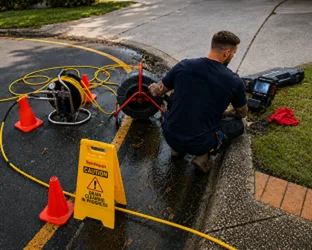
Acoustic listening, thermal imaging and section-by-section pressure testing find the actual split, which is rarely under the wet patch.

The damaged section is removed and replaced properly. If what we expose says the whole run is finished, you hear it straight, with prices for both roads.

Mains-pressure test before anything closes. The repair demonstrates itself; then, and only then, do surfaces go back.
The crisis ended when the meter closed. Call now and the repair gets planned properly, not frantically.
One fixed price, one properly repaired pipe, one pressure test you watch pass. That is the whole offer.

Leave your details and our local Cherrybrook team will call you back fast.